Ball Python Shipping Process: What to Expect in Transit
Buying a ball python online means trusting a box, a carrier, and a seller’s packing routine with a live animal you have not met yet. The ball python shipping process is well established, and it follows a predictable pattern from hydration to arrival day.
Knowing each step makes the wait far less stressful. It also helps you tell a seller who follows the rules from one who cuts corners.
Understanding the shipping process is one part of buying ball python morphs online safely — here’s how live animal shipping actually works
What the Ball Python Shipping Process Looks Like From Start to Finish
The process runs in a fixed order, and each step exists to reduce stress on the snake. Sellers who repeat the same routine ship more consistently than those who improvise.
-
Hydrate the snake with a warm soak before it is packed.
-
Place the animal in a bag or deli cup sized to its body.
-
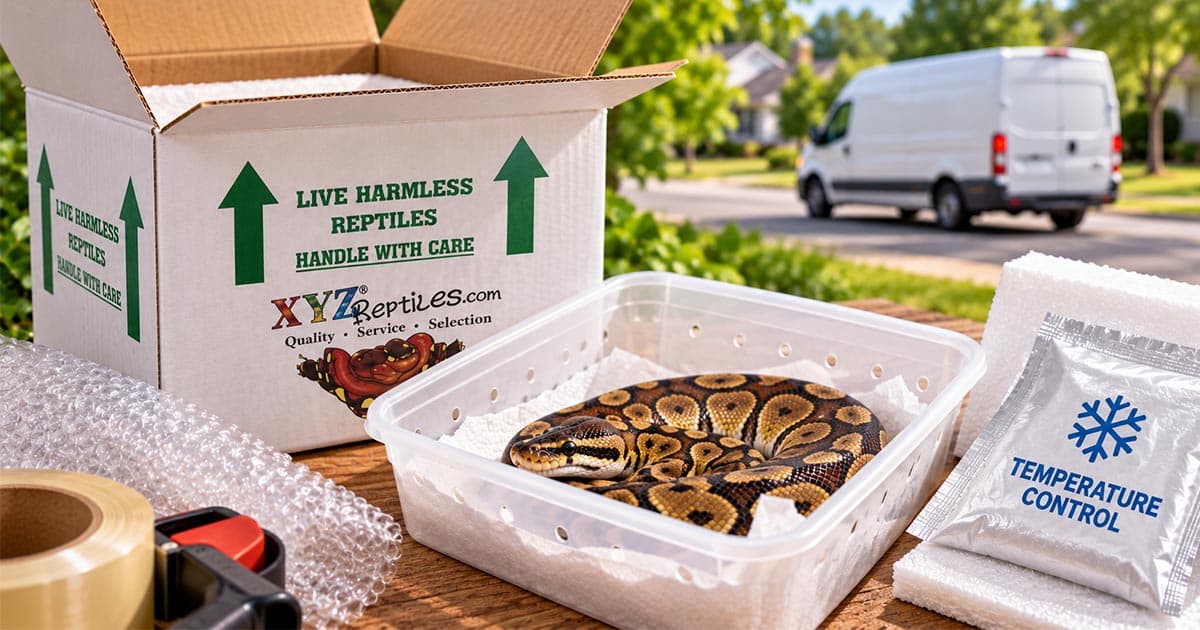
Set the container inside an insulated box with a foam liner.
-
Add a heat pack or cold pack based on the forecast along the route.
-
Seal, label, and hand the box to the carrier for overnight transit.
-
Track the shipment and receive it or collect it the next day.
Most problems appear at step five or six, not inside the box. Weather, flight schedules, and carrier hubs all influence timing.
Why Overnight Shipping Is the Standard for Ball Pythons
Short time in transit means fewer temperature swings and fewer handoffs. Overnight service keeps the animal in a climate-controlled environment for hours instead of days.
Many sellers route shipments to a carrier distribution center rather than a home address. Pickup at the hub shortens the final leg and avoids a delivery truck sitting in traffic with a live animal on board.
MorphMarket Shipping, a booking platform used by many breeders, offers both FedEx and UPS service types. XYZReptiles ships overnight on Tuesdays and Wednesdays within the lower 48 states, which keeps animals from sitting in a facility over a weekend.
Hydration and Preparation Before the Box Is Sealed
Before shipping, the snake is given a warm soak. That soak helps the animal hydrate before its journey, and hydration is an important step in the routine.
A hydrated snake starts the trip in better condition. Skipping this step is one of the small shortcuts that tends to show up later as a stressed arrival.
Packaging Standards That Keep a Ball Python Safe
Packing standards for live reptiles are specific, and they are not optional. Shipping protection programs often require them, so a seller who skips steps risks losing coverage if something goes wrong.
The Shipping Box
All live animals must ship in a sturdy, new, unused corrugated box designed for shipping animals. A random cardboard box from a storage closet does not meet that standard.
Inside, an insulated shipping box with a minimum half inch foam liner holds temperature steadier. That liner is what separates a properly packed shipment from a gamble.
Bags, Deli Cups, and Cushioning
Snakes travel in size-appropriate deli cups or reptile bags. A container that is too large lets the animal slide around, while one that is too small adds pressure.
Cushioning around the container keeps it from shifting during sorting and loading. Packing material also absorbs movement when the box is stacked or turned in transit.
Heat Packs and Cold Packs
Heat packs and cold packs are chosen based on the forecast in both the origin and destination cities. A shipment that leaves a warm state and lands in a cold one needs a plan for both ends.
Slight temperature variation between destinations is a real concern, not a theoretical one. Sellers check conditions along the entire route, not just at the airport.
What Is Inside a Ball Python Shipping Box
Every component has a job. Remove one and the others have to work harder than they should.
Component | What it does |
|---|---|
New corrugated box designed for live animals | Provides a clean, sturdy outer shell |
Insulated liner with at least half inch foam | Buffers temperature changes during transit |
Reptile bag or deli cup | Holds the snake securely at the right size |
Heat pack or cold pack | Adjusts for weather along the route |
Cushioning material | Keeps the container from shifting |
Box Sizes and How Many Snakes Fit
One of the most common box sizes is 8 by 8 by 7 inches. In that box, sellers typically ship a single hatchling ball pythons.
Hatchlings are small, so several can travel together when they are packed correctly. An adult ball python needs a box sized for a much larger body, and the container inside has to match the animal.
Do not assume one box size fits every order. Ask the seller how your specific animal will be packed if you want the details.
Temperature, Weather, and Shipping Holds
Weather is the biggest variable in the ball python shipping process. Sellers watch forecasts for the origin, the destination, and the hub in between before they commit to a ship date.
When temperatures fall outside a safe range, shipments get held. A hold is not a failure. It is the seller protecting the animal and the arrival guarantee.
Summer heat creates the same problem as winter cold. Both extremes can push a shipment to the next safe window.
Winter Shipping: Why Some Sellers Pause
Breeders do stop shipping in winter across many parts of the country. Cold snaps, snowstorms, and delayed flights make overnight service unpredictable.
A heat pack helps, but it has limits when the box sits on a cold tarmac or in an unheated truck. Sellers who pause are usually the ones with the strongest arrival records.
If you buy during the colder months, expect the seller to hold your animal until the forecast improves. That wait is normal and worth it.
Carrier Rules and Shipment Protection
Live animal shipping runs on carrier rules and program guidelines. Failure to follow packaging requirements can invalidate shipment protection, which is why sellers document their packing.
Shipping programs certified for live reptiles spell out box requirements, liner thickness, and container types. Book through an approved service and the shipment is covered if something goes wrong.
Ask your seller which carrier they use. Some use FedEx, some use UPS, and a few use both depending on the route.
Arrival Day: What to Expect
The box usually arrives in the morning when overnight service is used. The outside may look ordinary, and that is intentional. A plain box draws less attention and travels more safely.
The best immediate care for a new arrival is a visual check for any possible problems or injuries. Look at the eyes, body, and vent area, and confirm the snake responds to touch.
Make sure the snake has access to water right away. Then place it in its enclosure and keep the room quiet while it settles in.
Limit handling during the first days. A new ball python has been through a lot, and a calm, warm, secure enclosure is what it needs most.
What the Live Arrival Guarantee Covers
XYZReptiles offers a live arrival guarantee on animals shipped overnight to the lower 48 states. That guarantee depends on the animal arriving alive and the buyer following the seller’s arrival instructions.
If something looks wrong, document it right away with photos and contact the seller the same day. Waiting until the next morning can complicate a claim.
Read the guarantee terms before you check out so you know what is expected of you on arrival day.
How to Make Arrival Day Easier
Set up the enclosure before the shipment arrives, not after. Have the heat source running and the water bowl filled so the snake goes straight into a finished habitat.
Plan to be home on delivery day. If you cannot be, arrange pickup at the carrier hub so the box does not sit on a doorstep.
Keep the room warm and the lights low for the first day. Small comforts add up after a long trip.
Now that you know how the shipping process works, browse our ball pythons for sale to order a healthy, captive-bred animal with confidence
Frequently Asked Questions
How long does ball python shipping take?
Live ball pythons ship overnight, so transit typically takes one day from drop-off to arrival. Sellers usually ship early in the week to avoid weekend holds at carrier facilities. That schedule keeps the animal moving instead of sitting in a hub over Saturday and Sunday. Exact delivery times depend on the carrier route and your location.
How are ball pythons shipped?
They travel in a new corrugated box designed for live animals with an insulated foam liner. Inside, the snake sits in a size-appropriate reptile bag or deli cup, surrounded by cushioning and a heat pack or cold pack chosen for the weather. The box is then sealed, labeled, and handed to an approved carrier for overnight delivery.
Do sellers stop shipping ball pythons in winter?
Many do. Cold temperatures, snowstorms, and delayed flights make overnight service risky in winter, so sellers often hold shipments until the forecast improves. Heat packs help, but they cannot offset extreme cold at every point along the route. If you buy during a cold snap, expect a short delay before your snake ships.
What should I do when my ball python arrives?
Open the box in a quiet room and do a visual check for injuries or obvious problems. Confirm the snake has water, then place it in its prepared enclosure and leave it alone for the first day. Photograph anything unusual and contact the seller right away if you have concerns about the animal’s condition.
Can I pick up my ball python instead of having it delivered?
Yes. Many sellers ship to a carrier distribution center for pickup rather than a home address. Hub pickup shortens the final leg of the trip and keeps the box from sitting on a delivery truck or a porch. Ask the seller which option they prefer before you finalize the order.