Ball Python Gene Types: Recessive, Dominant, and Co-Dominant
Every ball python starts with the same natural blueprint. Wild type, also called normal, is the classic color and pattern found in nature, and it remains the baseline for everything seen in collections today. Thousands of different color and pattern combinations exist because breeders combine ball python gene types in deliberate ways.
The genetics behind those combinations are easier to understand than most new keepers expect. This guide explains the main ball python gene types, how they behave, and why the differences matter when buying or breeding.
What Are Ball Python Gene Types?
Genes exist in pairs in every snake. One copy comes from the mother and one from the father, and the relationship between those two copies decides how the trait appears. That relationship is what breeders mean when they talk about gene type.
The main ball python gene types are recessive, dominant, and co-dominant. Co-dominant is also called incomplete dominant, and both labels appear in morph listings, breeder ads, and genetics guides. A snake that looks normal still carries a set of genes that can influence its babies.
Some of the earliest morphs originated from wild-caught or farm-raised snakes in Africa in the 1990s. Odd-colored animals occasionally found their way into breeder collections and became the foundation for today’s variety. Examples of those early morphs include albino, hypo, clown, caramel albino, axanthic, piebald, and pastel. The normal wild-type ball python is considered the dominant type and acts as the starting point for all of them.
| Gene Type | How Many Copies Needed | What the Snake Shows | Examples From Common Morph Lists |
|---|---|---|---|
| Recessive | Two copies | The morph only appears when the snake is homozygous | Albino, piebald, clown, hypo, caramel albino, axanthic |
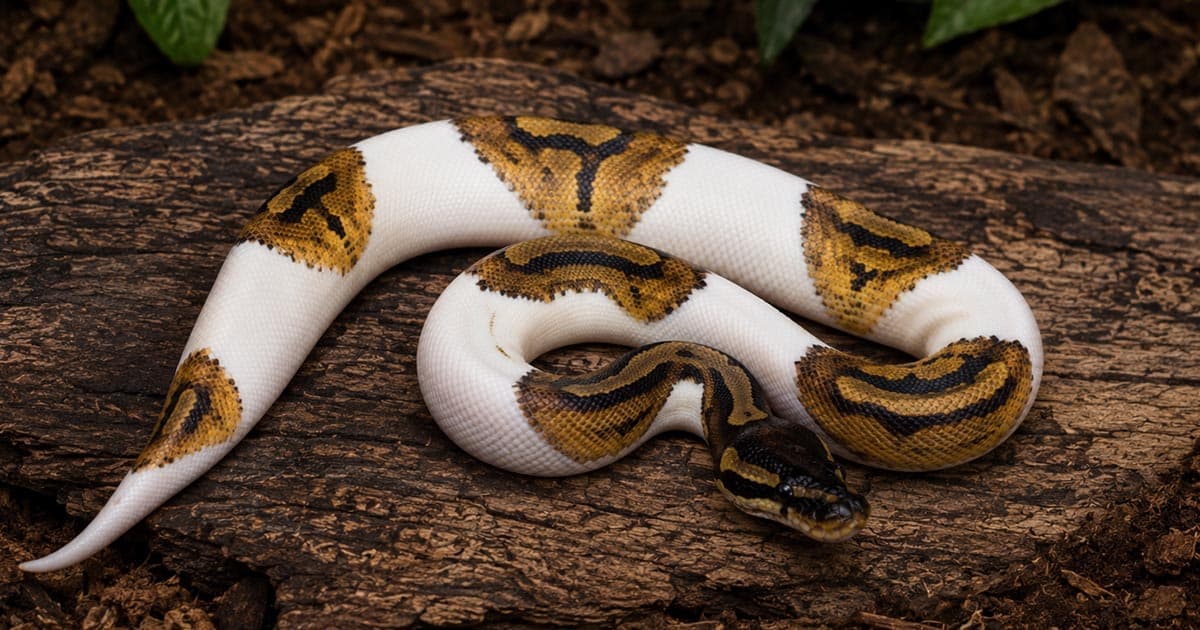
| Dominant | One copy | One copy and two copies look the same | Pinstripe |
| Co-dominant | One copy | Two copies can create a lighter, brighter, or more extreme super form | Pastel, fire, black pastel, black head |
Recessive Ball Python Genes
Recessive genes are easy to overlook because they hide so well. A recessive morph only appears when the snake inherits two copies of the gene, one from each parent.
A snake with just one copy will not show the trait. Instead, it is a carrier, which breeders call a het which is short for heterozygous. Het snakes can look completely normal, and the hidden gene can pass quietly to the next generation.
Albino, piebald, clown, hypo, caramel albino, axanthic, and lavender are classic recessive ball pythons. Lavender appears on morph trait lists as a recessive type, while the others have been common bases for recessive breeding projects for many years.
What Does Het Mean in Ball Pythons?
Het is short for heterozygous. A het ball python carries one copy of a recessive gene but does not express the visible trait. Its normal appearance makes the hidden gene easy to miss without a clear label or a genetic test.
Hets still matter for breeding. Two hets of the same recessive gene can produce visual hatchlings, and a visual recessive paired with a normal produces all hets. When two visual recessives are paired, every hatchling in the clutch will show the morph.
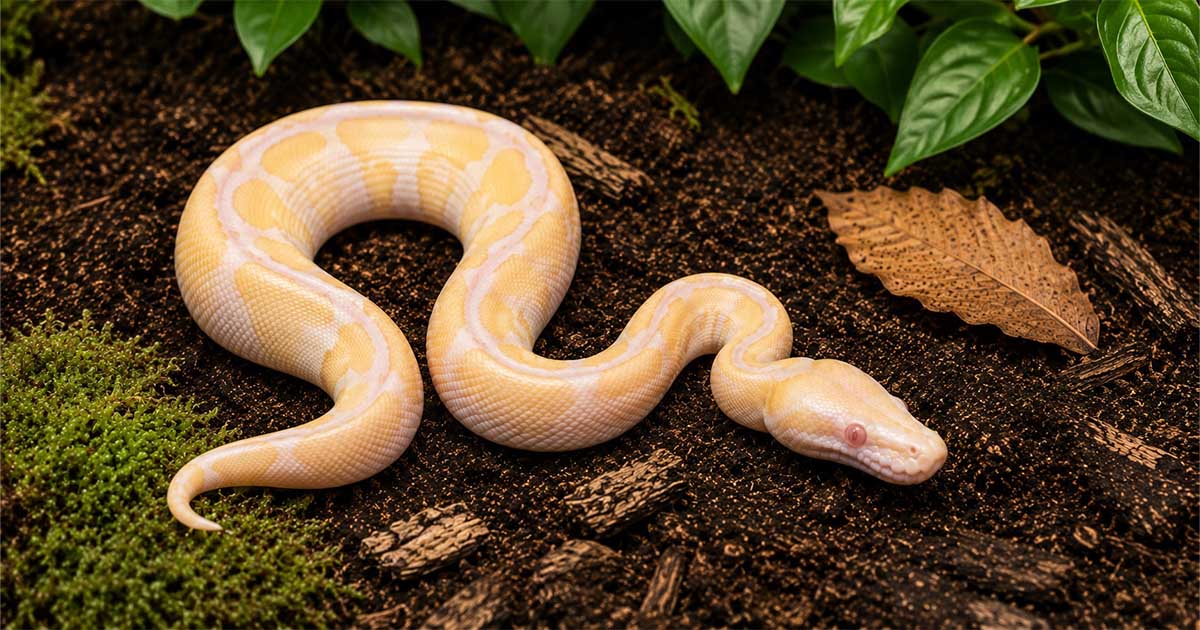 Albino ball python pictured
Dominant Ball Python Genes
A dominant gene changes the snake when only one copy is present. In a true dominant trait, two copies do not create a separate super form because the one-copy and two-copy animals look the same.
Normal wild type is the dominant baseline in ball pythons. A dominant trait can appear in hatchlings even when only one parent carries it, which means it can spread quickly through a collection in a single generation.
Co-Dominant and Incomplete Dominant Ball Python Genes
Co-dominant and incomplete dominant describe the same practical behavior in ball python breeding. One copy creates a visible change, and two copies create an even stronger version known as a super form.
Pastel is the clearest example. Heterozygous pastel pythons have a lightened coloration, while homozygous pastel pythons have an even lighter coloration. Those two-copy snakes are widely called super pastels.
Fire, black pastel, black head, and blade all behave as incomplete dominant or co-dominant genes. Black head and black pastel have both been around since 2002 and remain common in modern collections. A black pastel can be paired to create a super black pastel, which appears on popular morph lists as its own distinct form.
Homozygous Versus Heterozygous Co-Dominant Genes
Heterozygous means the two gene copies are different, and in co-dominant morphs that is enough to show the trait. Homozygous means both copies are the same, which usually produces a more extreme version called a super form.
The visible difference between heterozygous and homozygous pastels shows how important the two-copy state is for co-dominant genes. Super forms such as super pastel and super black pastel are often used as the starting point for more complex designer combinations.
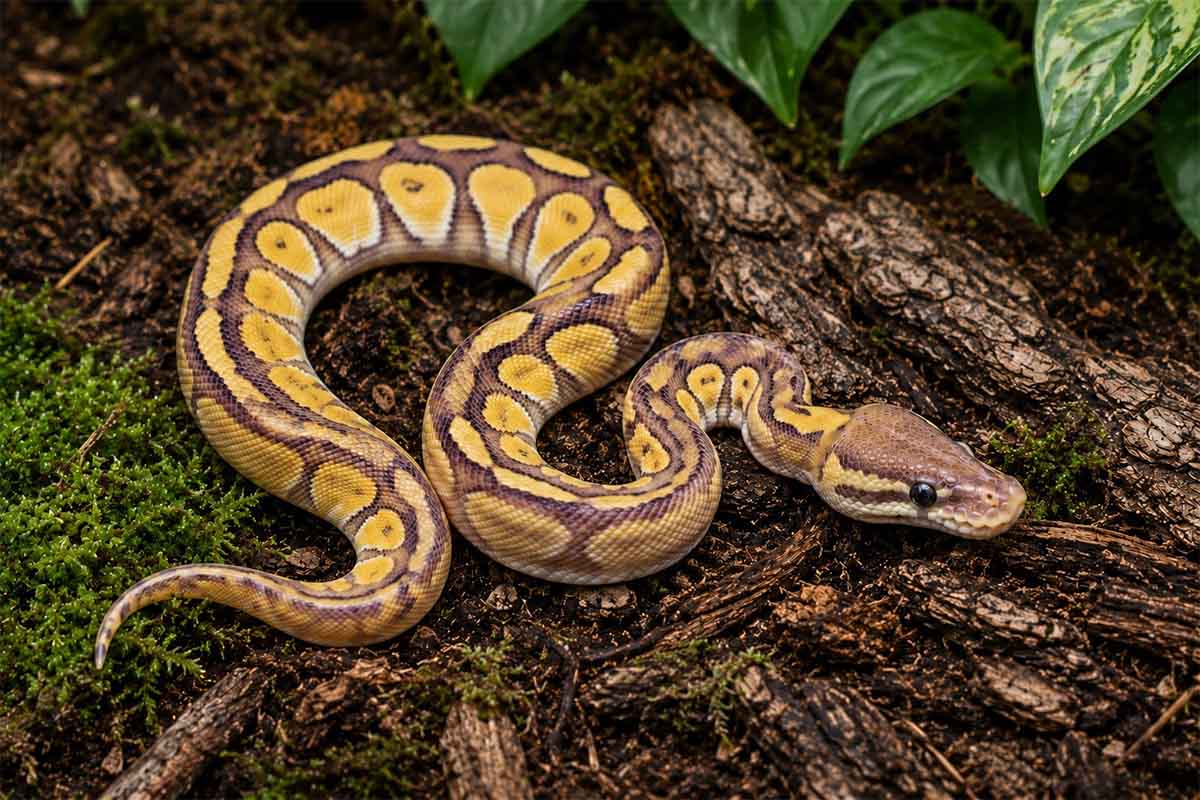 Pastel ball python pictured
Alleles, Loci, and Gene Complexes
Beyond the basic gene types, ball pythons add a twist with alleles and loci. A locus is the fixed location of a gene on a chromosome, and genes that occupy the same locus are called alleles.
Different genes can share the same locus. Mojave and lesser are different genes, and bamboo and mojave are two different genes that also share a locus. Because those genes sit in the same spot, they interact differently than genes from separate loci would.
Breeders organize related alleles into complexes. Lesser is tied to the Blue Eyed Leucistic Complex. Fire is the center of the Fire and Black Eyed Lucy Complex, which also includes fire lucifer. Spector belongs to the Yellow Belly Complex, and black pastel is part of the Cinny and Black Pastel Complex.
Genetic Behaviors and Morph Breeding Oddities
Some genes come with known behavioral quirks on top of their visual effects. The hobby tracks a small group of genetic behaviors and morph breeding oddities that breeders watch carefully before planning pairings.
Spider, champagne, hidden gene woma, woma, super sable, and power ball are on that list. Power ball is also known as super spotnose. These genes show that ball python genetics involves more than picking colors and patterns. Want the full picture of how these traits pass down? See our guide to ball python morph genetics.
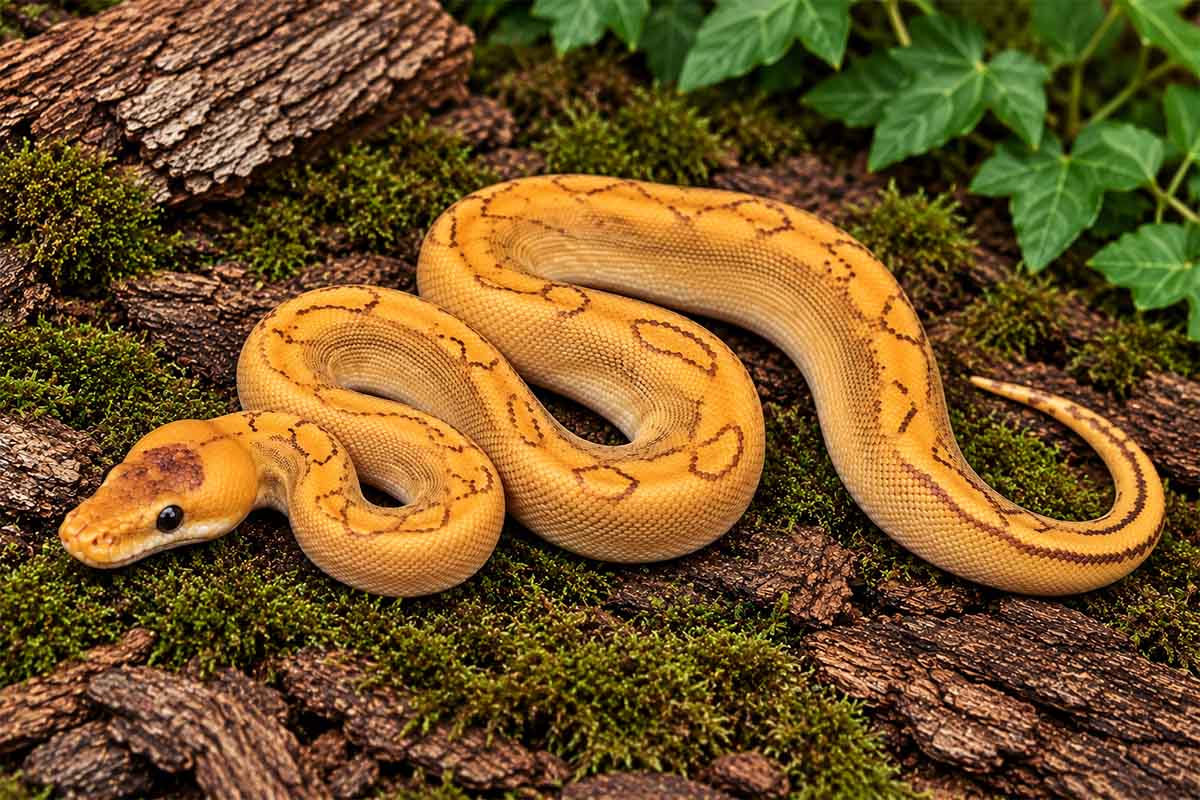 Champagne 100% het lavender ball python pictured
Why Ball Python Gene Types Matter
Gene type should change how you approach a purchase or a pairing. A visual recessive can be paired with another visual of the same gene for guaranteed visual offspring. A co-dominant gene can be doubled into a super form for different results in the next generation. A normal-looking snake may still be a het carrying hidden recessive genes.
When reviewing a listing, confirm whether the label says visual, het, or super. That label changes the breeding potential and the look you can expect. The same three gene types show up in everything from simple clutch predictions to advanced designer pairings, so learning the basics goes a long way.
Anyone who wants to see these patterns up close can browse the current collection of ball pythons for sale at XYZReptiles.
Frequently Asked Questions
What are the main ball python gene types?
The main ball python gene types are recessive, dominant, and co-dominant. Co-dominant behavior is also called incomplete dominant. A recessive gene only shows when the snake has two copies. A dominant gene shows with one copy, and two copies look the same as one. A co-dominant gene shows with one copy and can create a super form with two copies.
Which ball python morphs are recessive?
Recessive morphs include albino, piebald, clown, hypo, caramel albino, axanthic, and black lace. These genes only become visible when a snake inherits two copies. A snake with one copy is a het, which means it looks normal but can still pass the hidden gene to its offspring. Hets are common in breeding projects because they make recessive pairings possible.
Which ball python morphs are co-dominant?
Pastel, fire, black pastel, black head, and blade are co-dominant or incomplete dominant genes. Pastel is the easiest example to see because heterozygous pastels have lightened color and homozygous pastels are even lighter. The two-copy super pastel shows how the co-dominant pattern produces a stronger result than a single copy.
How do alleles change ball python breeding?
Alleles are genes that sit at the same locus, and that position changes how they interact. Mojave and lesser are different genes, yet both are tied to the Blue Eyed Leucistic Complex. Bamboo and mojave also share a locus. Pairing genes from the same locus does not behave like pairing genes from separate loci, so breeders track these complexes separately.